Dogo Argentino Puppy Training Timeline: 8 Weeks to 2 Years
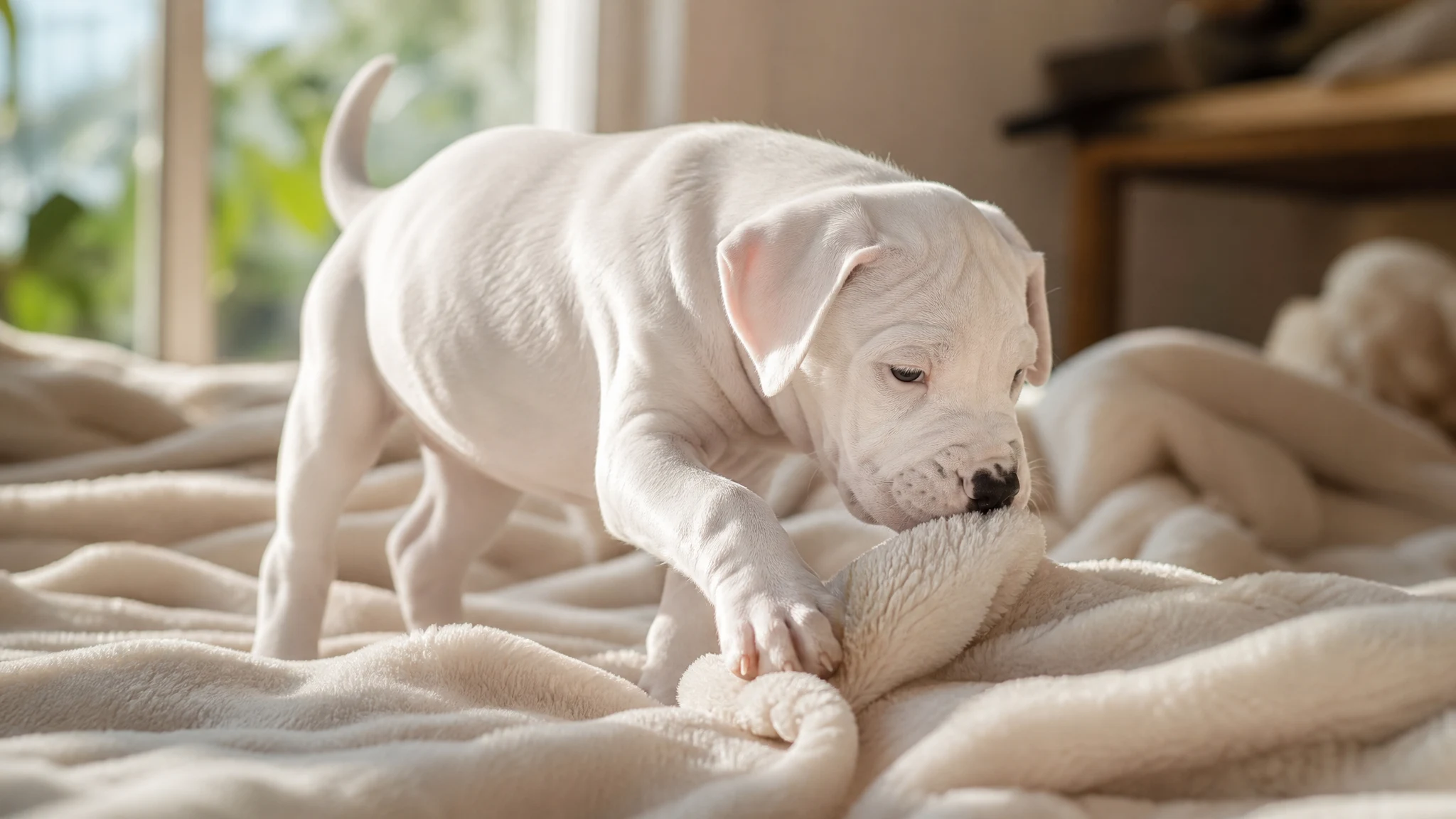
General training information. Every dog is an individual; for health or behavior concerns, see your veterinarian.
A Dogo Argentino puppy is a lot of dog from the start. The Dogo Argentino Club of America breed standard describes a strong, tenacious, rustic, loyal and above all courageous dog. That is a wonderful package in a trained adult. It is a lot to manage in a 10-week-old who has just discovered your couch cushions.
This guide walks through Dogo Argentino puppy training in stages, from the day you bring the puppy home to the second birthday. Use it as a Dogo Argentino puppy training schedule you can adjust, not a strict calendar. Individual dogs vary, and the ages below are planning guides, not breed rules.
Table of Contents
- Key Takeaways
- Know the Breed Before You Plan the Schedule
- Weeks 8 to 12: Home Routine and the Socialization Window
- Months 3 to 5: House Training, Bite Inhibition and Foundations
- Months 6 to 12: Adolescence
- Months 12 to 24: Maturity and Proofing
- Dogo Argentino Puppy Training Tips for Daily Life
- Sources
Key Takeaways
- Start socialization as soon as possible, and use positive reinforcement. Chewy's breed education page gives this advice for the Dogo Argentino.
- PetMD describes the breed as independent-minded, needing a confident owner and steady commitment. It says the breed suits experienced owners.
- Chewy says Dogos need at least an hour of intense exercise and activity every day. PetMD notes strong prey drive and says to use a leash or fenced area.
- PetMD says rapid growth can strain a puppy's joints and recommends large-breed puppy food. Ask your veterinarian how to pace exercise as your puppy grows.
- Plan for training to continue until about age two and beyond. Consistency matters more than any single week of the schedule.
Know the Breed Before You Plan the Schedule
Good training starts with knowing why the breed exists. According to the Dogo Argentino Club of America, Dr. Antonio Nores Martinez created the Dogo in the province of Cordoba, in central Argentina. The breed standard says it was created to protect family and property and to hunt large game and destructive predators such as wild boar, peccaries and pumas.
That history helps explain why a training plan needs to be thoughtful. It does not mean every Dogo behaves the same way. Individual dogs vary, and a puppy's upbringing matters a great deal.
What the Sources Say About Size and Temperament
The club's breed standard gives heights of 24 to 26.5 inches for males and 24 to 25.5 inches for bitches. Approximate weights are 88 to 100 pounds for males and 88 to 95 pounds for bitches. A dog that size can pull you off your feet, so manners need to be in place well before the puppy reaches full size.
PetMD says the breed is independent-minded, needs a confident owner and suits experienced owners. It also lists a strong prey drive, a tendency to become destructive when bored, and poor suitability for apartment living. Chewy says Dogos are kid-friendly when properly socialized and trained. PetMD calls them good playmates for older children who know how to interact with dogs, and says to supervise.
For how a Dogo gets along with other dogs, the sources I have do not give a clear answer. Ask your breeder or the Dogo Argentino Club of America, and watch your own puppy closely.
Choose Humane, Reward-Based Methods
Everything in this guide uses positive reinforcement. That means rewarding behavior you want with food, play or praise, and managing the environment so the puppy has fewer chances to practice behavior you do not want. This approach is in line with the position of the American Veterinary Society of Animal Behavior (AVSAB). Shock, prong and choke collars, alpha rolls, scruffing and other dominance methods have no place in a puppy's training. They risk fear and aggression, and they damage trust with a breed that needs a strong bond with its owner.
Weeks 8 to 12: Home Routine and the Socialization Window
Most puppies come home at about eight weeks. The first month is about safety, routine and gentle exposure to the world. Chewy advises starting socialization as soon as possible, and this is the stage where that advice matters most.
Build a Predictable Day
Puppies learn fastest when life is predictable. Set regular times for meals, potty breaks, play, training and naps. PetMD says Dogo puppies can eat up to three meals a day, and recommends a large-breed puppy food. Ask your veterinarian which food and portions suit your puppy.
A sample day might look like this:
- Wake, then straight outside to potty.
- Breakfast, then potty again.
- Short play and a two-minute training session.
- Nap in a crate or pen.
- Repeat through the day, with a last potty trip before bed.
Naps matter. A tired, overstimulated puppy bites more and learns less.
Socialization Done Safely
Socialization does not mean letting your puppy meet every dog and person. It means giving calm, positive experiences with many sights, sounds, surfaces and people, at a pace the puppy can handle. Think of it as building a bank of good memories.
Good early experiences include:
- Walking on different surfaces such as grass, tile, gravel and carpet.
- Hearing household noises such as the vacuum, doorbell and kitchen sounds.
- Meeting calm, friendly adults, including people in hats or carrying umbrellas.
- Riding in the car, with a treat waiting at the end.
- Gentle handling of paws, ears, mouth and collar area.
Talk to your veterinarian about when and where your puppy can safely go before vaccinations are complete. Carry the puppy, sit on a bench or invite vaccinated, healthy dogs to your yard. Keep each experience short and end it while the puppy is still happy. If your puppy seems scared, create distance and let them watch from a safe spot. Never force an introduction.
One more point: the breed was built for protection, so early, calm exposure to visitors is especially useful. Reward relaxed greetings, and keep a leash on the puppy when guests arrive.
First Skills to Teach
Keep sessions to a couple of minutes, several times a day. Start with:
- Name recognition: say the name, reward when the puppy looks at you.
- Sit and down using a treat lure.
- Crate comfort: feed meals in the crate with the door open at first.
- Coming when called, practiced indoors and rewarded generously.
Months 3 to 5: House Training, Bite Inhibition and Foundations
This stage is about habits. The puppy is growing fast, getting stronger and testing what works. What you teach now shapes the adult dog, so do not skip the basics.
House Training Without Stress
House training is mostly management. A puppy who never gets to make a mistake learns quickly where to go. Follow these steps:
- Take the puppy out after waking, after eating, after play and at regular intervals in between.
- Go to the same spot each time and wait quietly.
- Reward right away when the puppy goes outside. Carry a treat to the door.
- Supervise indoors, or use a crate or pen when you cannot watch.
- If an accident happens, clean it with an enzymatic cleaner and move on. Never punish after the fact.
Accidents often come from giving too much freedom too fast. Expand the puppy's space slowly. Night trips may be needed for a while, and this varies a lot by puppy.
Bite Inhibition and Mouthing
All puppies mouth. A large, strong breed needs to learn early that human skin is off limits. The goal is not to stop the puppy from using the mouth. It is to teach control, then to redirect the mouth to toys.
- Keep several chew toys within reach and swap one in whenever teeth touch skin.
- If the mouthing continues, calmly end play for a short break, then resume when the puppy settles.
- Reward gentle behavior, such as taking a treat softly from your fingers.
- Avoid rough wrestling and hand games that encourage grabbing.
- Tired puppies mouth more, so protect nap time.
Do not hit, flick the nose, hold the mouth shut or use scruffing or alpha rolls. These can make a puppy anxious or defensive. If mouthing seems intense or is getting worse, contact a qualified trainer who uses reward-based methods, and mention it to your veterinarian.
Leash Manners and Impulse Control
An adult Dogo can weigh nearly 100 pounds, according to the breed standard. A puppy who pulls at 25 pounds will pull much harder later. Teach loose-leash walking now:
- Reward the puppy for staying beside you.
- Stop moving when the leash tightens, and go again when it slackens.
- Use a well-fitted flat collar or harness, and keep walks short and interesting.
Also practice waiting at doors, waiting for food bowls and settling on a mat. These impulse-control games help a strong-willed breed learn that calm behavior pays off.
Protect the Joints
PetMD says rapid growth can strain a Dogo puppy's joints, and lists hip dysplasia among the breed's common health issues. Chewy says adult Dogos need at least an hour of intense exercise a day, but that figure is for adults, not puppies. For a growing puppy, ask your veterinarian how much exercise is right at each age. Until you hear otherwise, avoid long runs, repeated jumping and forced exercise on hard surfaces. Short, frequent play and sniffing walks are a safer start.
Months 6 to 12: Adolescence
Adolescence is where many owners feel the training slip. The puppy who came when called now seems to have gone deaf. This is normal for growing dogs, and it is the stage where consistency pays off. PetMD describes the breed as independent-minded, so expect your Dogo to test the rules.
What to Expect
- Less focus, especially around distractions.
- More energy and more chewing, which PetMD notes can turn destructive when the dog is bored.
- Stronger interest in chasing, and PetMD notes a strong prey drive.
- Changing reactions to strangers, other dogs or unusual objects.
Do not take it personally, and do not punish the puppy for testing. Go back a step in training, make rewards better and reduce distractions until the skill returns.
Prey Drive and Safe Spaces
PetMD says the Dogo's strong prey drive means the dog needs a leash or fenced area. Take that seriously. A recall that works in the kitchen will not necessarily work when a squirrel, cat or rabbit appears. Use a long line in open areas, and do not trust off-leash freedom until the recall is reliable under heavy distraction. Even then, many owners choose to keep a Dogo on leash in unfenced spaces. Check that fencing is secure and high enough for a large, athletic dog.
Exercise and Mental Work
Chewy says Dogos need at least an hour of intense exercise and activity every day, and PetMD says they need lots of daily exercise. For an adolescent still growing, your veterinarian can help you build up gradually. Mix physical work with mental work such as:
- Food puzzles and snuffle mats.
- Scent games in the yard or house.
- Short training sessions with new tricks.
- Structured play such as fetch and tug with clear start and stop cues.
Bored dogs find their own entertainment, and PetMD warns the breed can become destructive. A tired dog with a job is easier to live with.
Keep Socializing
Socialization is not finished after the puppy weeks. Keep taking your dog to new places on leash, and keep rewarding calm behavior around people and other animals. Quality matters more than quantity. If your dog shows fear or aggression, contact a qualified reward-based trainer and your veterinarian early rather than waiting.
Classes and the Canine Good Citizen Test
A reward-based class gives structure and a chance to practice around distractions. The Dogo Argentino Club of America promotes the AKC Canine Good Citizen test for Dogos, which makes a good goal for the end of the first year or later. Ask any class or trainer about their methods first, and walk away from anyone who uses force or pain.
Months 12 to 24: Maturity and Proofing
The second year is about polishing. Your dog now knows the basics, and your job is to make them reliable in the real world. Do not assume the work is done at the first birthday. The sources I have do not state an age at which Dogos reach full mental or physical maturity, so ask your breeder, the Dogo Argentino Club of America and your veterinarian what to expect for your own dog.
Proofing Your Skills
Proofing means practicing known skills in new places and with new distractions. Work up in small steps:
- Practice sit, down, stay and recall at home.
- Move to the yard, then a quiet street, then a busier park on leash.
- Increase duration, distance and distraction one at a time, never all at once.
- Reward generously when you raise the challenge.
Consistency Over Years
A Dogo Argentino Club of America news post, written by a club member, describes an approach called indifference training. It stresses follow-through and lifelong consistency. It is one owner's account, not club policy, but the central idea is sound: the rules you set should not change from day to day. Everyone in the household should use the same cues and the same expectations. PetMD and Chewy both stress that this breed needs a confident owner and consistent commitment.
Jobs, Sports and Purpose
PetMD lists military or police work, search and rescue and service work as areas where Dogos have been used, along with historic hunting. Most pet Dogos will not do these jobs, but they still benefit from having a purpose. Consider structured activities such as obedience practice, trick training or the Canine Good Citizen test. Check with the club or an experienced local trainer about activities that suit your dog and are available where you live.
Health Checks Along the Way
Training and health go together. The Dogo Argentino Club of America's health program lists these required screens for breeding dogs: congenital deafness (an OFA evaluation based on a BAER test), hip dysplasia (OFA or PennHIP), and a cardiac evaluation at 12 months or older by a cardiologist. Deafness matters for training too, since a dog who cannot hear needs a different set of cues. PetMD lists deafness, hip dysplasia, periodontal disease, gastric dilatation-volvulus, laryngeal paralysis and hypothyroidism among common health issues. If you notice a change in behavior, hearing, energy or movement, talk to your veterinarian. They can diagnose and advise; a training plan cannot.
Dogo Argentino Puppy Training Tips for Daily Life
These Dogo Argentino puppy training tips apply at every age, from the first week to the second birthday.
Use This Quick Schedule Overview
| Stage | Main focus | Key cautions |
|---|---|---|
| Weeks 8 to 12 | Routine, crate comfort, safe socialization, name and sit | Check vaccination timing with your veterinarian before public outings |
| Months 3 to 5 | House training, bite inhibition, loose-leash basics | Avoid rough play and overexercise on growing joints |
| Months 6 to 12 | Recall, impulse control, continued socialization | Strong prey drive; use leash or secure fencing |
| Months 12 to 24 | Proofing, reliability, structured activities | Keep rules consistent; keep up veterinary care |
Tips That Make the Biggest Difference
- Train every day, briefly. Several short sessions beat one long one.
- Manage first, train second. Use gates, crates and leashes so the puppy cannot rehearse bad habits.
- Reward what you like. Catch the puppy being calm and pay for it.
- Keep everyone consistent. The whole household should use the same cues and rules.
- Do not skip rest. Overtired puppies are harder to train.
- Plan for the full-grown dog. Do not allow behavior from a puppy, such as jumping on people, that you will not want from an adult near 100 pounds.
- Know your limits. If you feel out of your depth, find a qualified reward-based trainer early.
Is a Dogo Right for Your Home?
PetMD says the breed is not well suited to apartment living and suits experienced owners. Be honest about your time, space and experience before you commit. Also check local rules, since some cities, landlords and insurers set their own limits on certain breeds. Ask your local animal control agency or housing provider about any that apply to you.
A Final Word
A well-trained Dogo is a joy: loyal, athletic and devoted to its people. Getting there takes patience, steady routines and humane methods over two years or more. Take it one stage at a time, enjoy the puppy while you have the puppy, and lean on your veterinarian, your breeder and the parent club when questions come up.
Sources
- Dogo Argentino Club of America
- Dogo Argentino Club of America, Breed History
- Dogo Argentino Club of America, Breed Standard
- Dogo Argentino Club of America, Health Programs
- Dogo Argentino Club of America, news post: A Story About Indifference Training
- PetMD, Dogo Argentino breed page
- Chewy, Dogo Argentino breed education page