Dogo Argentino Training for Confident Owners
The Dogo Argentino is courageous, athletic and independent-minded. Here is how to build socialization, exercise and consistent, reward-based habits from the first week, while being honest about the work involved.
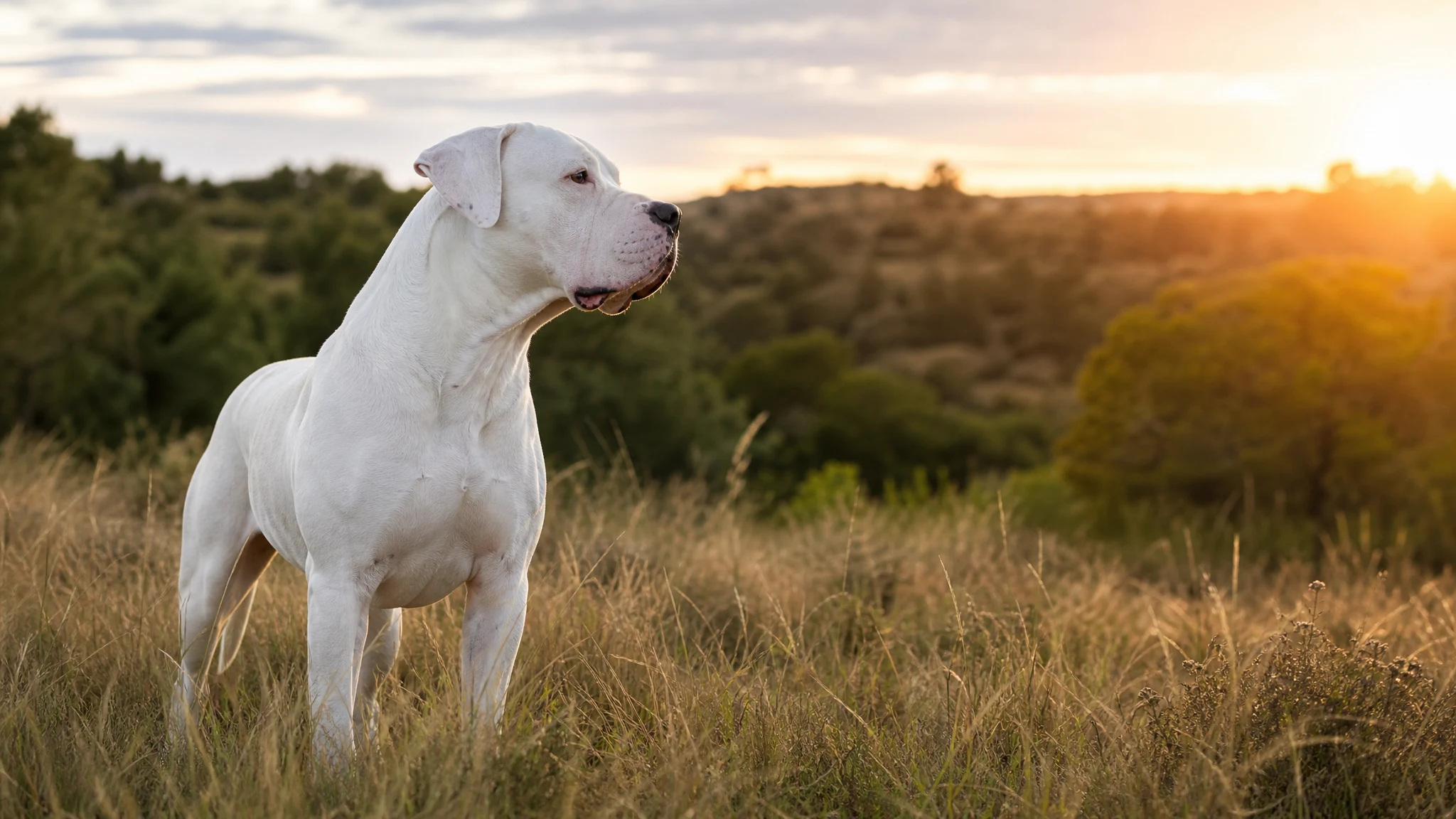
The Dogo Argentino at a glance
From the AKC breed page and the national breed club, as they state it.
| Origin | Cordoba province, central Argentina; created by Dr. Antonio Nores Martinez source |
| Bred for | Created to protect family and property and to hunt large game and destructive predators (wild boar, peccaries, pumas) source |
| Height | Males 24 to 26.5 inches, bitches 24 to 25.5 inches (heights outside these limits are disqualifying) source |
| Weight | Approximate weights: males 88 to 100 pounds, bitches 88 to 95 pounds source |
| Life expectancy | 9 to 15 years (typical, per PetMD and Chewy; not the AKC page) source |
| Energy | Athletic with a matching energy level (Chewy; the AKC numeric rating could not be opened) source |
| Trainability | Needs a confident owner and consistent commitment; independent-minded; suits experienced owners (Chewy and PetMD; not the AKC rating) source |
| Barking | Generally quiet (PetMD; not the AKC rating) source |
| With children | Kid-friendly when properly socialized and trained (Chewy). PetMD: good playmates for older children who know how to interact with dogs; supervise. source |
| Shedding | Sheds regularly year-round (PetMD); heavier in fall and spring (Chewy) source |
| Temperament | Strong, tenacious, rustic, loyal, and above all courageous (breed standard) source |
Training Guides for Your Dogo
Practical, reward-based guides covering socialization, exercise, prey drive, and everyday manners for a strong, independent breed.
Puppy
From the first night home to adolescence: a Dogo Argentino puppy's training.
Training basics
Potty, crate and leash training, written for Dogo Argentinos.
- Are Dogo Argentinos Easy to Train? Temperament and Trainability FAQ
- Crate Training a Dogo Argentino and Preventing Separation Anxiety
- Dogo Argentino Training: The Complete Guide for Owners
- How to Potty Train a Dogo Argentino Puppy
- Leash Training a Dogo Argentino: Pulling, Lunging and Loose-Leash Walking
Behavior
The Dogo Argentino problems owners ask about most, and the instincts behind them.
Exercise and jobs
How much a Dogo Argentino needs to do, and the sports and work the breed was made for.
What Dogo Argentinos do
Sports and work the breed is known for. source
Dogo Argentino health screening
Tests the breed's club and OFA recommend for breeding dogs. Ask a breeder for results.
| Recommended screens | Required: congenital deafness (OFA evaluation based on BAER test) | Required: hip dysplasia (OFA or PennHIP evaluation) | Required: cardiac evaluation at 12 months or older by a cardiologist | Elective, choose one: OFA elbow evaluation, autoimmune thyroiditis, CAER eye exam, or CHIC DNA repository participation | Club… source |
| Health issues the club notes | Hip dysplasia, Periodontal disease, Gastric dilatation-volvulus (GDV), Deafness, Laryngeal paralysis, Hypothyroidism source |
| National breed club | Dogo Argentino Club of America, https://www.dogousa.org source |
Dogo Argentino Training Questions
Is the Dogo Argentino easy to train?
PetMD describes the breed as independent-minded and best suited to experienced owners, and says it needs a confident owner with consistent commitment. Chewy recommends positive reinforcement. Individual dogs vary, so plan for steady, reward-based sessions rather than expecting quick obedience.
When should I start socializing a Dogo puppy?
Chewy advises starting socialization as soon as possible, using positive reinforcement. Chewy also says the breed is kid-friendly when properly socialized and trained. Ask your veterinarian how to socialize safely before your puppy finishes vaccinations. Go slowly and reward calm behavior.
How much exercise does a Dogo Argentino need?
Chewy says the breed needs at least an hour of intense exercise and activity every day, and PetMD says lots of daily exercise. PetMD also notes it can become destructive when bored and is not well suited to apartment living.
How should I handle a Dogo's prey drive?
PetMD lists strong prey drive as a known challenge and says the breed needs a leash or fenced area. The Dogo Argentino Club of America's breed standard notes the Dogo was created to hunt large game such as wild boar and pumas. Reward calm focus, and keep walks leashed.
What health screens should I ask a breeder about?
The Dogo Argentino Club of America's health program lists required hearing (BAER test), hip dysplasia, and cardiac evaluations, plus one elective test. Ask breeders to show you the results. For any concern about your own dog, talk with your veterinarian.
General training information. Every dog is an individual; for health or behavior concerns, see your veterinarian.