How to Potty Train a Dogo Argentino Puppy
General training information. Every dog is an individual; for health or behavior concerns, see your veterinarian.
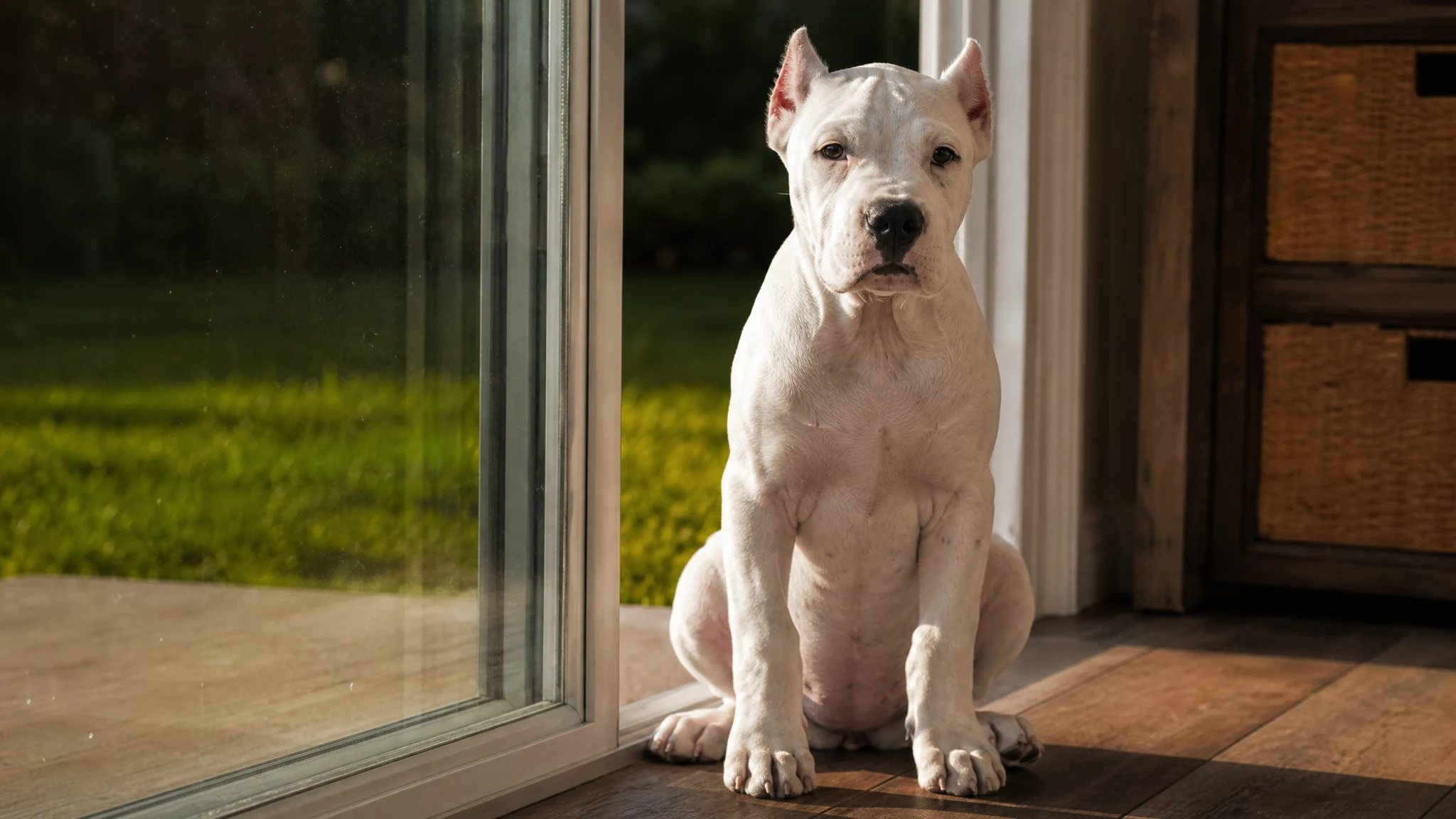
A Dogo puppy is a big dog in the making, and that changes how you plan. Learning how to potty train a Dogo Argentino starts with accepting that you are building a habit for a dog who will be strong, athletic and smart. The good news is that a clear routine, patience and plenty of rewards go a long way.
This guide covers dogo argentino potty training from the first day home: what you need, a step-by-step schedule, how to use a crate, what to do after an accident, and what progress may look like. If you want the bigger picture of raising this breed, our complete guide to Dogo Argentino training is a good companion read.
Why Dogo Argentino Potty Training Needs a Plan
The Dogo Argentino Club of America breed standard says the breed was created to protect family and property and to hunt large game such as wild boar and pumas. The standard describes the temperament as strong, tenacious, rustic, loyal and above all courageous. That is a lot of determination packed into one dog.
PetMD says the breed needs a confident owner and a consistent commitment, and describes it as independent-minded. For house training a Dogo Argentino, that means a half-hearted routine tends to get you half-hearted results. Decide on the plan, share it with everyone in the home, and stick to it.
Individual dogs vary. Some puppies pick this up quickly and some take longer. Judge your own puppy, not a chart.
Size matters too. The breed standard lists adult males at roughly 88 to 100 pounds and bitches at roughly 88 to 95 pounds. PetMD notes that large-breed puppies grow fast and may eat up to three meals a day. More meals mean more trips outside, so plan your day around that.
What You Need Before the Puppy Comes Home
- A properly sized crate. It should be big enough for an adult Dogo to stand and turn around in, with a divider so a puppy only has room to stretch out and rest.
- Small, soft treats. Tiny pieces your puppy can swallow in a second. Keep them by the door.
- A leash and a secure potty area. PetMD flags a strong prey drive and recommends a leash or fenced area, so do not rely on an open yard.
- An enzymatic cleaner made for pet messes. It helps remove the scent that can draw a puppy back to the same spot.
- A notebook or phone app. You will log meals, naps, potty trips and accidents.
- A cue word. Pick one short phrase, such as "go potty," and use it every time.
- The food your breeder or veterinarian recommends. PetMD recommends large-breed puppy food. Ask your veterinarian which one fits your puppy.
Step-by-Step: How to Potty Train a Dogo Argentino Puppy
Step 1: Pick one potty spot and go there every time
Choose a spot in your fenced area or on a short leash. Walk your puppy straight there, stand still and stay quiet. Boring is good. Playing first teaches the puppy that outside is for play, not for business.
Step 2: Build a schedule around your puppy's day
Puppies usually need to go at predictable times. Take your puppy out:
- First thing in the morning, before anything else.
- Right after every meal.
- Right after waking from any nap.
- After a play session or a burst of excitement.
- Before crate time and before bed.
- Every hour or two in between while the puppy is very young, and then a little less often as the puppy matures.
Feed at set times rather than leaving food out. Regular meals tend to make potty times easier to predict. Your veterinarian can tell you how often to feed and how long your puppy can reasonably hold it at each age. The sources we rely on do not give a bladder timeline for the breed, so ask your vet.
Step 3: Reward the moment it happens
When your puppy finishes going in the right spot, say "yes!" and give a treat right away. Timing is everything. If you wait until you are back inside, your puppy will not connect the treat with the act. Chewy recommends positive reinforcement for this breed, and it fits well with AVSAB-aligned, reward-based training.
Add your cue word just as your puppy begins to go. Over time the phrase may help you prompt a trip on a rainy morning.
Step 4: Use the crate as a rest spot
Most puppies do not like to soil the place where they sleep. A crate sized correctly can help you take advantage of that. Make it comfortable and positive. Feed a few meals in there, toss in treats, and never use it as punishment.
When your puppy is not in the crate, they should be in your sight. Use a leash tether, a baby gate or a puppy pen to keep them with you. Wandering off quietly to sniff in another room is how many accidents happen.
Take your puppy out right when you open the crate. Carry the pup if needed, because small puppies cannot always wait the few seconds it takes to walk to the door.
Step 5: Learn the signals
Watch for sniffing the floor, circling, suddenly stopping play, or heading for a corner or the door. When you see one, calmly take your puppy out. Keep your log. After a week or two you will probably see patterns, and you can adjust your schedule to match.
Step 6: Plan for nights
Young puppies often cannot sleep through the night yet. Set a quiet alarm for a late-night trip if needed. Keep it dull: no talking, no play, a treat for success and straight back to bed. Ask your veterinarian how long a night stretch is realistic for your puppy's age.
Step 7: Slowly add freedom
Once your puppy has gone a good while with no accidents, you can open up the space a little at a time. Start with one room, with you in it. Add another room only after a stretch of success. If accidents start again, go back a step. That is normal, not failure.
What to Do After an Accident
Accidents will happen. How you handle them matters more than the mess.
- Stay calm. If you catch your puppy in the act, interrupt with a cheerful sound and carry or lead them outside. Reward if they finish there.
- Clean it up without drama. Use the enzymatic cleaner and keep the puppy elsewhere while you do.
- Do not punish. Never scold, rub a nose in it or use physical corrections. Those methods can make a puppy afraid to go in front of you, and they work against reward-based training. They can also make a puppy sneak off to hide it.
- Look for the cause. Was the last trip too long ago? Was the puppy unsupervised? Adjust the plan.
If your puppy suddenly has many accidents, strains, or seems unwell, call your veterinarian. Medical problems can look like training problems, and only a vet can sort that out.
Breed-Specific Tips for Dogo Owners
Match the training to a determined dog
PetMD describes the breed as independent-minded and best for experienced owners. A Dogo Argentino Club of America news post, written by one club member, stresses follow-through and lifelong consistency. It is one owner's account and not club policy, but the point holds up. Do not skip trips because you are tired. A puppy who gets different rules from different people will learn that rules are negotiable.
Burn off energy before it turns into trouble
Chewy says the breed needs at least an hour of intense exercise and activity every day. PetMD says a bored Dogo can become destructive and that the breed is not well suited to apartment living. A puppy still growing should not be pushed into hard exercise, so ask your veterinarian what is appropriate at each age. Keep in mind PetMD notes that rapid growth can strain joints.
A tired puppy is usually easier to manage, but running and excitement also trigger potty needs. Add a trip outside after every play session.
Keep the leash on in the yard
Because of the strong prey drive PetMD describes, potty breaks are not the time to let your puppy roam off. A leash or a securely fenced area keeps your puppy focused and safe from squirrels, cats and whatever else may catch their attention.
Socialize while you train
Chewy advises starting socialization as soon as possible. Short, happy outings with your veterinarian's go-ahead on vaccines help your puppy learn to go in new places, too. Take treats and your cue word along.
Common Mistakes to Avoid
- Giving too much freedom too soon. A puppy with a whole house will find a quiet corner.
- Waiting for the puppy to ask. Many puppies give little warning. Take them out on a schedule.
- Rewarding late. A treat delivered after you come back inside misses the moment.
- Using the crate for too long. A puppy kept in a crate beyond what they can hold will be forced to go there, which undermines the whole idea.
- Punishing accidents. It can damage trust and slow progress.
- Changing the plan every few days. A consistent routine works better than a perfect one you cannot keep.
- Skipping the cleaner. Leftover scent can invite repeat accidents.
What Results to Expect
There is no single timeline. Many puppies make steady progress over a few weeks to a few months with a consistent routine, though some take longer and some have setbacks along the way. Age, the puppy's own pace and how closely the household follows the plan all play a part.
With a steady schedule, frequent rewards and good supervision, you may see fewer accidents over time and more reliable signals from your puppy. A puppy who seems reliable at home may still slip in a new place or when excited. That does not mean the training failed. Go back to basics for a few days.
The sources we rely on do not give a breed-specific house training timeline, so treat any number you read elsewhere as a rough guide. Your veterinarian or the Dogo Argentino Club of America can point you to resources, and your breeder can often share what worked for their lines.
Quick Daily Checklist
| When | What to do |
|---|---|
| Wake up | Straight to the potty spot, reward |
| After meals | Potty trip, reward, then supervised time |
| After naps and play | Potty trip, reward |
| Between trips | Supervised in sight, or in the crate to rest |
| Before bed | Last trip, then crate |
| After any accident | Clean calmly, review the schedule, no punishment |
Final Thoughts
A Dogo Argentino is tenacious by design, and that same trait can work for you when you are patient and consistent. Keep the schedule, reward often, and treat every accident as information. Once the habit is set, the rest of your training gets easier, and our complete Dogo Argentino training guide can help you take the next step.
Sources
- Dogo Argentino Club of America, Breed Standard
- Dogo Argentino Club of America, news post on indifference training (owner essay)
- PetMD, Dogo Argentino breed page
- Chewy, Dogo Argentino breed education page