Dogo Argentino Sports and Jobs: Putting the Breed's Instincts to Work
General training information. Every dog is an individual; for health or behavior concerns, see your veterinarian.
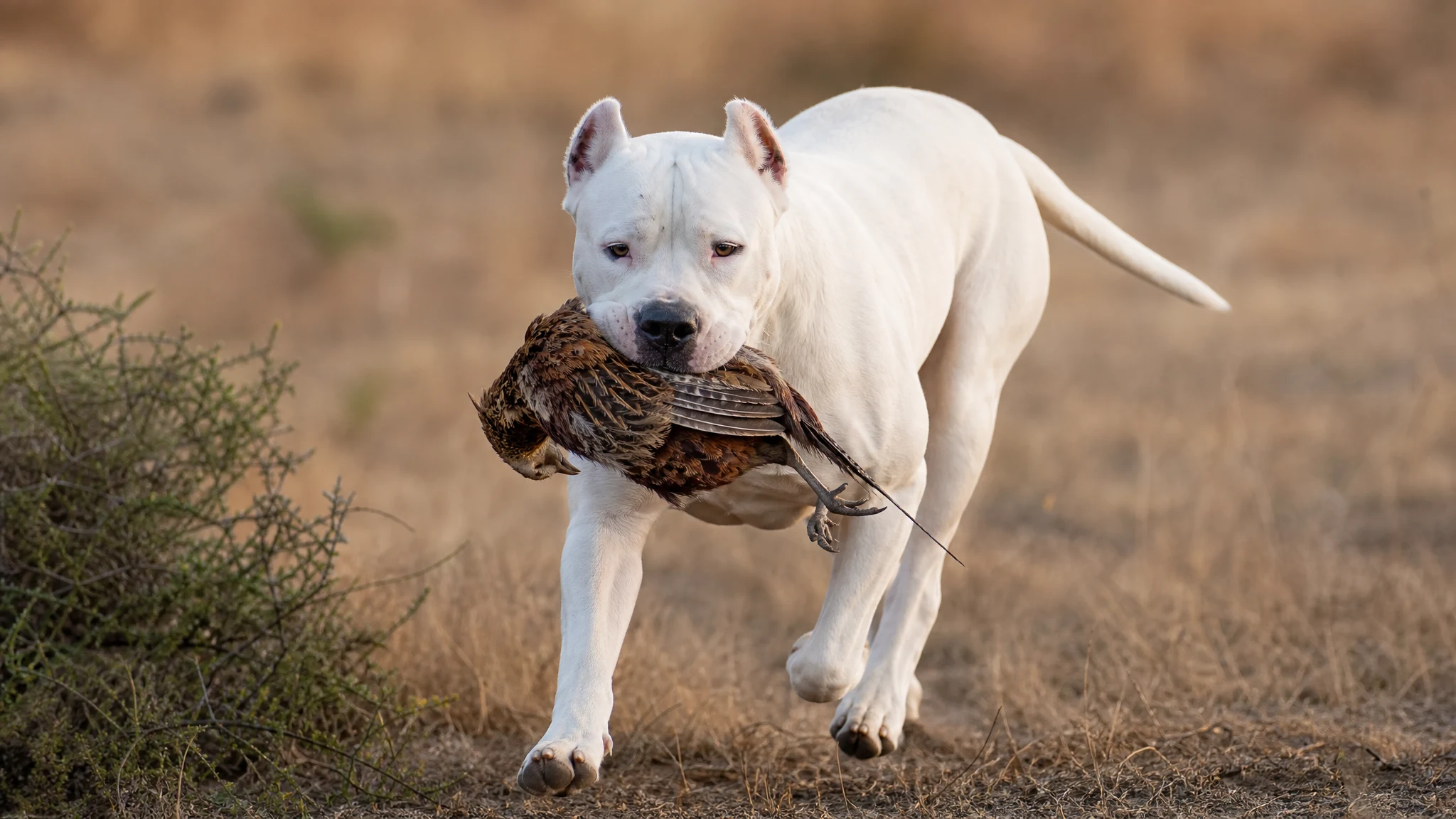
A Dogo Argentino was built for work. The Dogo Argentino Club of America says the breed was created in Cordoba province, Argentina, by Dr. Antonio Nores Martinez, to protect family and property and to hunt large game and destructive predators such as wild boar, peccaries and pumas.
Most of us do not have a boar to chase. What we do have is a powerful, athletic dog who needs a job. This guide shows how to pick an activity, prepare your dog and get started step by step.
What the Breed Was Made For
The club's breed standard describes the Dogo as strong, tenacious, rustic, loyal and above all courageous. It lists male height at 24 to 26.5 inches and female height at 24 to 25.5 inches, with approximate weights of 88 to 100 pounds for males and 88 to 95 pounds for females.
PetMD lists the working roles people have found for the breed beyond historic hunting: military or police work, search and rescue, and service work. Chewy describes the Dogo as athletic with a matching energy level, and says it needs at least an hour of intense exercise and activity every day.
Individual dogs vary. One Dogo may love a long job with a clear task. Another may prefer short, sharp sessions. Let your own dog show you.
Be Honest About the Challenges First
PetMD notes a strong prey drive, which means a leash or fenced area is needed. It also says the breed can become destructive when bored and is not well suited to apartment living. PetMD and Chewy both describe a dog that needs a confident owner and a steady commitment, and that suits experienced owners best.
Those traits are exactly why a job helps. They are also why you plan carefully before you start.
Materials You Will Need
- A well-fitted flat collar or harness and a sturdy leash. No shock, prong or choke collars are needed or recommended.
- A long line for practicing recall in open spaces.
- A secure fenced area for off-leash play and drills.
- Small, soft treats your dog values highly, plus a favorite toy.
- A treat pouch and a clicker or a consistent marker word.
- Water and a shaded rest spot for every session.
- A notebook to log sessions, progress and any concerns to raise with your veterinarian.
Step-by-Step: Finding and Starting a Job for Your Dogo
Step 1: Get a Veterinary Check First
Before any serious athletic work, ask your veterinarian whether your dog is fit for it. PetMD lists hip dysplasia, gastric dilatation-volvulus (GDV), deafness, laryngeal paralysis, hypothyroidism and periodontal disease among the breed's common health issues. Your vet is the right person to judge what your individual dog can do.
The Dogo Argentino Club of America's health program names hip evaluation (OFA or PennHIP), a BAER hearing test and a cardiac evaluation as required screens for breeding dogs. If you have a puppy, ask the breeder for those results. Puppies grow fast, and PetMD notes that rapid growth can strain joints, so ask your vet when hard, repetitive exercise is appropriate.
Step 2: Build the Foundation at Home
Every sport and job rests on the same basics: attention, a reliable recall, a solid sit, down and stay, and calm behavior around distractions. Chewy recommends positive reinforcement and starting socialization as soon as possible.
Our complete guide to Dogo Argentino training covers these skills in detail. Work through them before you add the excitement of a sport.
Step 3: Start with the Canine Good Citizen Test
The Dogo Argentino Club of America promotes the AKC Canine Good Citizen (CGC) test for Dogos. It is a sensible first goal. It checks the manners a dog needs in public, and it gives you a clear target.
Check the AKC website for the current test items and for evaluators in your area. Many local training clubs offer CGC classes in general, but confirm directly with any club how it runs them.
Step 4: Choose an Activity That Fits Your Dog
Match the activity to the traits the sources describe. Think about what your dog does naturally, and what you can manage safely.
| Activity | What it is | Why it may suit the breed |
|---|---|---|
| Canine Good Citizen | An AKC test of good manners in everyday settings | The parent club promotes it for Dogos, and it builds control and calm |
| Search and rescue | Finding missing people, usually through team training | PetMD lists it among the breed's jobs; it demands stamina and focus |
| Service work | Trained assistance tasks for a person with a disability | PetMD lists service work; it needs a steady, well-socialized dog |
| Military or police work | Professional handler-and-dog teams | PetMD lists it, but it is a career path, not a hobby for most owners |
| Hunting | The breed's historic purpose | It reflects the original large-game role, but it is a specialist pursuit |
For other organized dog sports, the sources I rely on do not say which ones accept or suit Dogos. Ask the AKC and the Dogo Argentino Club of America which events are open to the breed and what the entry rules are.
Step 5: Find a Club or Class
Look for local training clubs that teach the activity you picked. Visit first without your dog. Watch a class and ask how they handle large, strong, high-drive dogs.
Look for instructors who use rewards and clear communication. Walk away from any program that uses force, fear or dominance methods. The American Veterinary Society of Animal Behavior (AVSAB) advises against them, and they can damage trust with a powerful dog.
Step 6: Introduce the Activity in Small Pieces
Break each skill into tiny steps. Keep sessions short and end while your dog is still keen. Reward often at first, then slowly ask for more.
A club member's essay on the parent club's site, describing what the author calls indifference training, stresses follow-through and lifelong consistency. It is one owner's account, not club policy, but the point is useful: decide your rules, then apply them the same way every day.
Step 7: Manage Prey Drive Around Every Session
PetMD says the breed's prey drive calls for a leash or fenced area. Treat that as a firm rule. Use a secure fence or a leash for warm-ups, cool-downs and breaks. Do not trust recall around wildlife, small animals or open roads.
Practice recall on a long line and reward heavily. Build up distractions gradually.
Step 8: Add Daily Exercise Around the Work
Chewy's figure of at least an hour of intense daily activity applies to the whole day, not just class time. Structured work, a good walk and some safe play can all count. A tired, mentally engaged dog is less likely to turn to destruction, which PetMD flags as a risk when the breed is bored.
Step 9: Watch Health and Recovery
Give water and rest breaks. Keep sessions gentle in hot weather. Because GDV is on PetMD's list of common issues, ask your veterinarian for guidance on feeding and exercise timing and on the warning signs that need an emergency visit.
If your dog limps, tires unusually early or seems in pain, stop and call your vet. Do not try to diagnose it yourself.
Step 10: Review and Adjust
Every month or so, read your notes. Is your dog enjoying the work? Is your recall improving? Are you both calmer after sessions? If not, shorten the sessions, lower the difficulty or try a different activity.
Tips for Success
- Socialize early and keep it going. Chewy says the breed is kid-friendly when properly socialized and trained, and PetMD says supervise play with children.
- Make the work the best part of your dog's day. Use rewards your dog truly loves.
- Be consistent. Everyone in the household should use the same cues and rules.
- Keep your own goals modest. A solid CGC is a real achievement.
- Check with the club or agency before assuming anything about rules, eligibility or fees. This page does not list any because I cannot verify them here.
Common Mistakes to Avoid
- Skipping the vet check. A powerful breed can hide discomfort until it becomes a bigger problem.
- Overworking a growing puppy. Joints are still developing, so ask your vet how much is safe.
- Going off-leash too soon. Strong prey drive does not respect good intentions.
- Using harsh tools or methods. Shock, prong and choke collars, alpha rolls and scruffing are not part of humane training.
- Treating exercise as a replacement for training. A long run does not teach manners.
- Expecting a hunting or protection dog from a pet. Serious working roles take specialist training and a suitable dog. Check with the club and with the relevant agency about requirements and any legal rules where you live.
- Letting boredom build. A bored Dogo can get destructive.
What You Can Reasonably Expect
With steady, reward-based practice, many owners find their dogs become more focused and settle better at home. A job may help channel the energy PetMD and Chewy describe, and it may reduce boredom-driven mischief.
Results vary with the dog's age, health, temperament and your consistency, and nothing is certain. Some dogs take months to reach a goal such as the CGC, and some find a particular activity is just not for them. That is fine. Try another.
Final Thoughts
The Dogo Argentino is not a casual pet. It is a courageous, athletic working breed that does best with an experienced, committed owner. Give it a purpose, protect its health and keep the training humane, and you will be working with the breed's nature instead of against it.