Socializing a Dogo Argentino With Kids, Dogs and Strangers
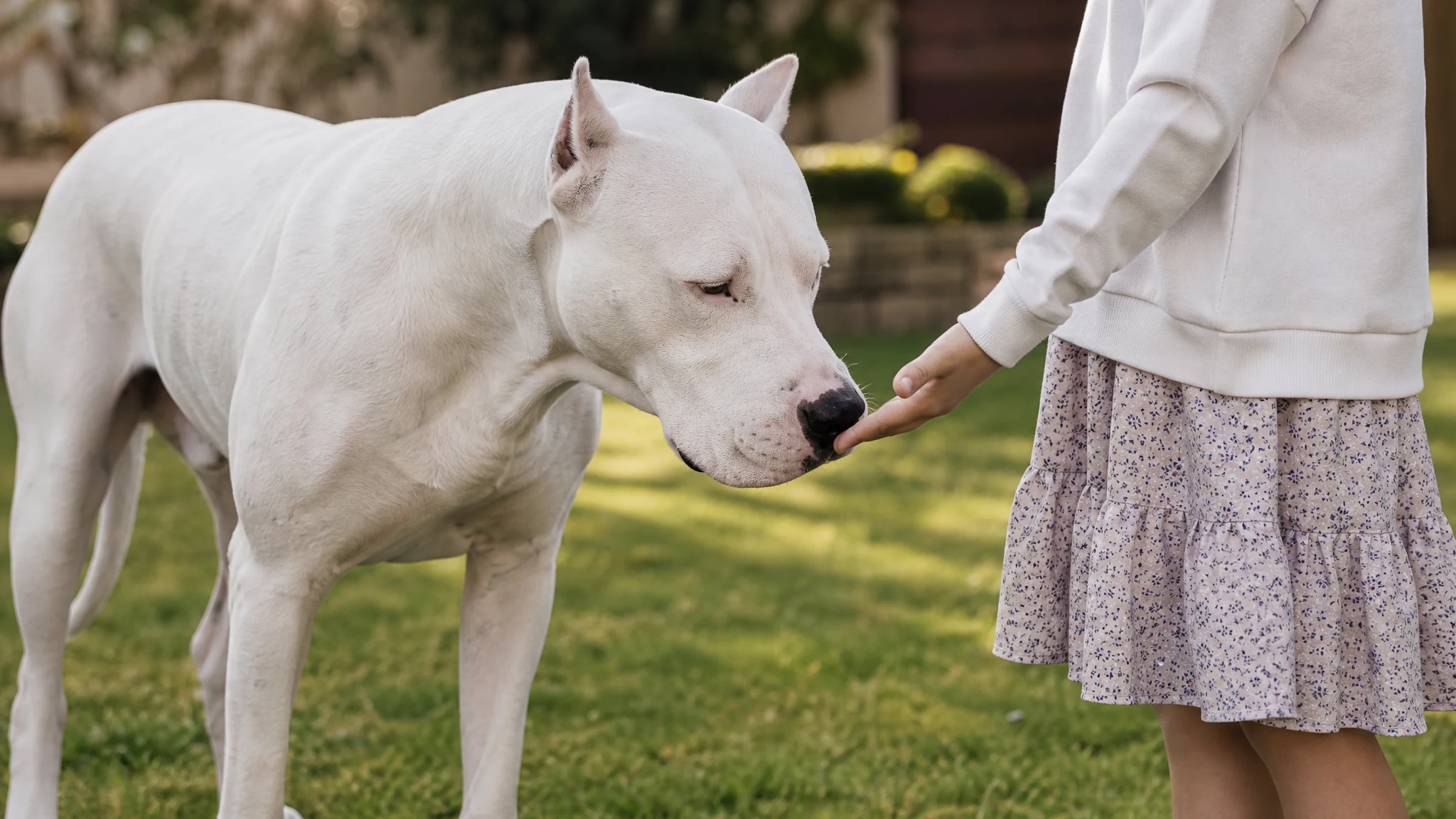
General training information. Every dog is an individual; for health or behavior concerns, see your veterinarian.
The Dogo Argentino was created in Cordoba province, Argentina, by Dr. Antonio Nores Martinez. According to the Dogo Argentino Club of America breed history, the breed was built to protect family and property and to hunt large game. That is a lot of courage and drive in one dog. It is also why Dogo Argentino socialization is not optional.
This guide walks you through a practical plan for introducing your Dogo to children, other dogs and unfamiliar adults. It uses reward-based methods only. Every dog is an individual, so adjust the pace to the dog in front of you.
What Socialization Actually Means
Socialization is not forcing a dog to meet everyone. It is teaching your Dogo that new people, animals and places are normal and not worth worrying about. The goal is a calm, neutral dog, not a dog that must greet everything.
Chewy's breed education page advises positive reinforcement and starting socialization as soon as possible. The Dogo Argentino Club of America also promotes the AKC Canine Good Citizen test for Dogos, which is a useful way to check manners around strangers and other dogs.
Are Dogo Argentinos Good With Kids?
Chewy describes the breed as kid-friendly when properly socialized and trained. PetMD adds that Dogos can be good playmates for older children who know how to interact with dogs, and it says to supervise. Notice the conditions in both statements. The breed is not automatically safe with children. The training and the supervision are what make it work.
The breed standard from the Dogo Argentino Club of America describes the temperament as strong, tenacious, rustic, loyal and above all courageous. Males stand roughly 24 to 26.5 inches and weigh approximately 88 to 100 pounds, and bitches are slightly smaller. A dog that size can knock over a small child by accident, even in play.
The club's breed standard also says the breed was created to protect family and property. That history is a reason to be thoughtful when children have friends over and the house gets loud and physical. Rough play between kids can look like a threat to some dogs. Plan for it instead of hoping it will not come up.
Dogo Argentino With Other Dogs
The reference material we rely on does not give a clear rating for how Dogos get along with other dogs. Rather than guess, ask your breeder and the Dogo Argentino Club of America about the lines your dog comes from and what to expect. Then watch your own dog closely and let their behavior guide you.
PetMD lists a strong prey drive among the breed's known challenges and says the dog needs a leash or a fenced area. That matters for dog introductions. A dog that likes to chase can turn a casual meeting into a problem fast, so keep early meetings controlled.
Materials You Will Need
- A flat buckle collar or a well-fitted harness, and a sturdy 6-foot leash
- A long line for practice in open areas
- Small, soft, high-value treats, cut into tiny pieces
- A mat or bed for settle practice
- A baby gate or exercise pen to create a safe space
- Chew items and puzzle toys for calm downtime
- A fenced area or secure leash setup for dog meetings
- A notebook to log what went well and what did not
- A few calm, dog-savvy helpers: adults, older children and a friendly, steady adult dog
For the basics that support everything below, such as name response, sit, leave it and loose-leash walking, see our complete guide to Dogo Argentino training.
Step-by-Step Socialization Plan
Step 1: Build a Calm Foundation at Home
Before you invite anyone over, teach your Dogo to settle on a mat and to look at you on cue. Reward calm behavior often. A dog that knows how to relax at home has a skill to fall back on when things get exciting.
PetMD notes the breed can become destructive when bored, and Chewy says it needs at least an hour of intense daily exercise. Make sure your dog has had a good walk and some mental work before any social session. A tired, fed dog learns better than a wound-up one.
Step 2: Start With Calm Adults
Begin with one or two quiet adults your dog does not know. Ask them to ignore the dog at first and let the dog approach if they choose. Have your helper toss a treat to the side, not offer a hand over the head.
Keep sessions short. End while the dog is still relaxed. If your Dogo stiffens, stares or backs away, add distance and try again another day.
Step 3: Practice Around Strangers in Public
Move on to quiet public places. Sit at a comfortable distance from foot traffic and reward your dog for noticing people and staying calm. Do not push the dog closer. Gradually reduce the distance over many sessions.
Let your dog watch without having to greet. Many Dogos do best learning that strangers are simply part of the scenery. Always keep the dog on a leash in public.
Step 4: Introduce Children Gradually and Safely
Start with older, calm children who have been taught how to behave around dogs. Teach them to stand still, keep their hands low, speak softly and never hug, climb on or chase the dog. Younger children should never be left alone with any large dog.
Set up short, structured sessions. Have the child toss a treat or ask the dog to sit, with you holding the leash. Keep your dog on leash at first so you can step in at once if needed.
- Always have an adult actively watching, not just in the same room.
- Separate dog and child with a gate or closed door when you cannot supervise.
- Give the dog a place to retreat, and teach children to leave the dog alone there.
- Stop the session if the dog seems tense, stiff or overexcited.
Step 5: Manage Play and Visiting Children
Running, shrieking and wrestling games can overexcite a dog bred for protection and hunting. When friends visit, put the dog in a separate room with a chew or move play outdoors in a controlled way. Calm, supervised interaction beats a free-for-all.
Watch for guarding or hovering around the children, such as blocking, staring or stiffening when another child or adult approaches. The reference material does not flag herding as a breed trait, but the protective history means these behaviors are worth noticing. If you see them, contact a qualified, reward-based trainer or behavior professional early.
Step 6: Introduce Other Dogs on Neutral Ground
Start with parallel walks. Two dogs on leashes walk in the same direction at a comfortable distance, each with a handler. Reward your Dogo for looking at you and staying loose. Close the gap slowly over several walks.
Choose a calm, well-mannered adult dog as the first partner. Avoid dog parks, which are unpredictable. When the dogs seem relaxed, allow a brief, loosely leashed greeting and then move on. Keep greetings short and end on a good note.
Because of the breed's prey drive, do not let off-leash meetings happen outside a securely fenced area. Fences must be solid and tall enough to be safe. Check the club for guidance on safe housing with other dogs in the home.
Step 7: Add Variety and Keep It Going
Rotate through new places, surfaces, sounds and people. Vary the helpers: different ages, hats, bikes, umbrellas. Keep rewarding calm behavior. Socialization does not end at a certain age. An owner's essay on the Dogo Argentino Club of America site on indifference training stresses follow-through and lifelong consistency. It is one owner's account, not club policy, but the point is sound: keep practicing.
Tips for Success
- Reward the behavior you want, and do it often.
- Keep sessions short and end them while your dog is still doing well.
- Read your dog's body language. Stiff posture, hard stares and a closed mouth are signals to add distance.
- Use a management plan, such as gates, leashes and crates, to prevent mistakes while your dog learns.
- Meet other owners who understand the breed. The parent club is a good place to start.
- Ask your veterinarian if your dog seems unusually fearful or reactive, since pain and other health issues can affect behavior.
Common Mistakes to Avoid
- Flooding the dog. Throwing a dog into a crowd to "get used to it" often creates fear, not confidence.
- Letting kids take over. Children should never pull ears, tails or lips, or disturb a dog that is eating or sleeping.
- Assuming a friendly puppy means a friendly adult. Keep practicing as your dog matures.
- Skipping exercise. A bored dog is harder to train and more likely to get into trouble.
- Using harsh tools or punishment. The American Veterinary Society of Animal Behavior (AVSAB) supports reward-based training. Shock, prong or choke collars, alpha rolls and scruffing can increase fear and aggression.
- Relying on off-leash meetings. With a strong prey drive, a leash or secure fence is the safe choice.
- Going it alone with serious problems. If your dog growls, snaps or lunges, get help from a qualified, reward-based professional.
What Results to Expect
With patient, consistent practice, many owners find their Dogo becomes calmer and more predictable around new people, children and other dogs. Progress can take weeks or months, and it may not be a straight line. Some dogs may always prefer distance from strangers or other dogs, and that is acceptable if the dog stays under control.
Results vary with the dog's genetics, early experiences and your consistency. Socialization can lower risk, but it cannot remove it. Supervision stays part of life with a powerful breed. PetMD says the breed suits experienced owners, and Chewy says it needs a confident owner with consistent commitment. If you feel unsure, that is a good reason to bring in a qualified trainer early.